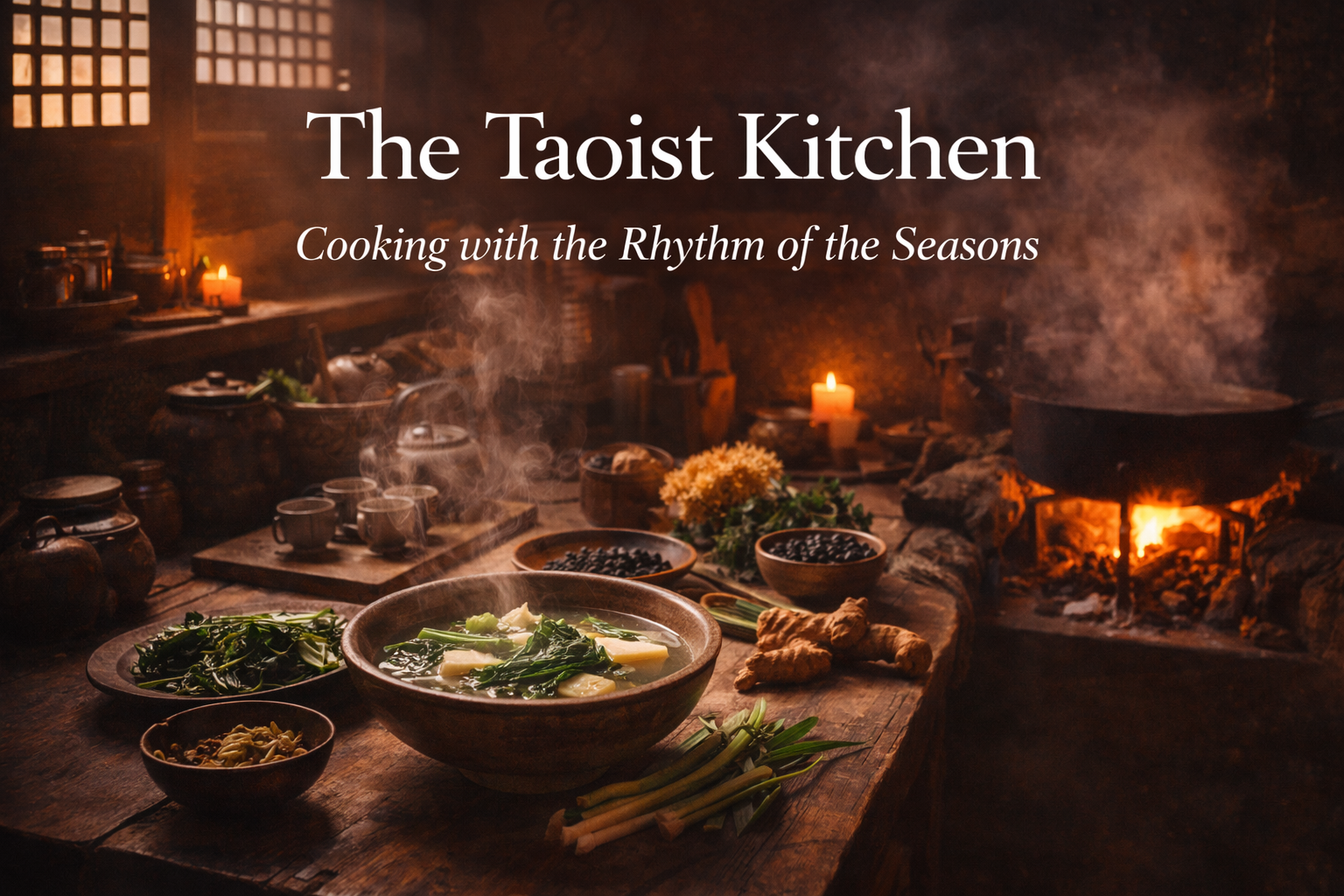
The Taoist Kitchen
Cooking with the Rhythm of the Seasons
In a Taoist kitchen, food is never only nourishment. A bowl of soup, a handful of herbs, or a pot slowly simmering on the stove is part of a larger practice of balance — a way of aligning the body with the changing rhythms of the natural world.
For centuries Taoist philosophy has emphasized harmony between human life and the cycles of nature. The seasons, the climate, and the energetic qualities of ingredients all influence what is eaten and how it is prepared. Cooking becomes not only a practical task but a quiet form of cultivation — a daily opportunity to respond to the environment with attentiveness and moderation.
Rather than strict recipes, the Taoist kitchen follows simple guiding principles: balance warmth and coolness, support the body through seasonal change, and favor foods that nourish rather than overwhelm.
Food as Living Balance
In Taoist thought, ingredients carry energetic qualities that influence the body. Some foods warm and stimulate circulation, while others cool and calm internal heat. Certain ingredients moisten dryness, while others gently dry excess moisture.
These qualities help cooks respond to the needs of the season.
A warming bowl of ginger broth in winter strengthens the body against cold winds. Cooling herbs and light vegetables in summer prevent excess heat from building within the body. In this way the kitchen becomes a place where philosophy and everyday life meet.
The goal is not rigid dietary rules but a sensitive awareness of balance.
Cooking Through the Four Seasons
Spring
Renewal and Lightness
Spring marks a time of movement and renewal in the natural world. As plants begin to grow and the air becomes warmer, meals often become lighter and fresher.
Simple soups, young greens, and lightly cooked vegetables support the body as it shifts from the heavier foods of winter toward greater activity. Fresh herbs, scallions, and mild spices help stimulate circulation and encourage the sense of renewal associated with the season.
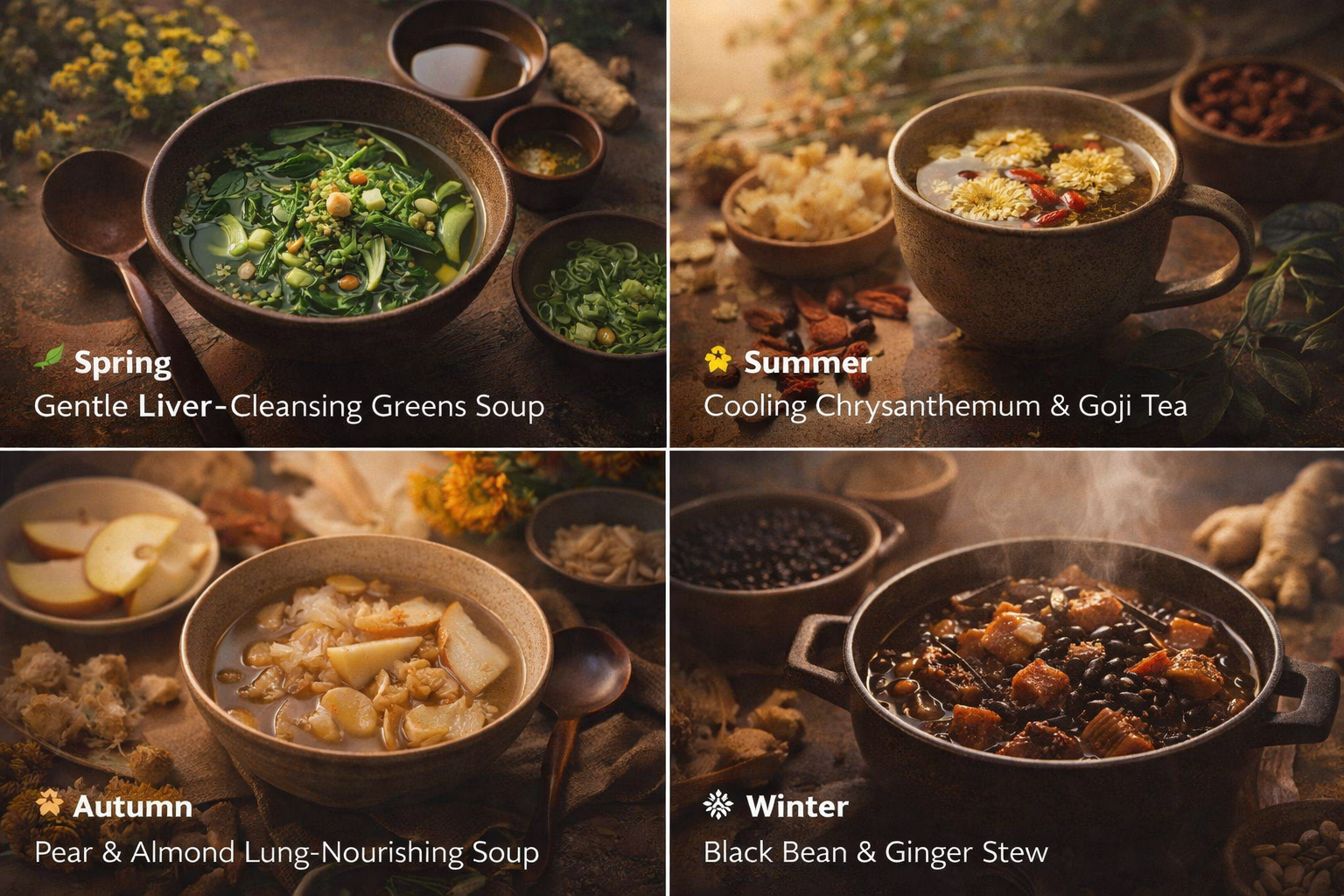
A bowl of delicate vegetable broth with tofu and spring greens reflects the spirit of the Taoist kitchen at this time of year: clean, simple, and restorative.
Summer
Cooling and Simplicity
During the heat of summer the Taoist kitchen emphasizes foods that cool the body and prevent internal heat from accumulating.
Herbal teas, light porridges, fresh fruits, and bitter greens appear more frequently on the table. Chrysanthemum tea, mint, cucumber, and melon are often used to refresh the body during long warm days.
Meals tend to be lighter and less heavily seasoned, allowing the body to remain comfortable and balanced despite the heat of the season.
The goal is not indulgence but ease — nourishment that supports energy without overwhelming the body.
Autumn
Moisture and Reflection
As the air begins to dry and the days grow cooler, autumn meals gradually shift toward foods that restore moisture and prepare the body for winter.
Pears, sesame seeds, root vegetables, and gentle stews become more common. These ingredients are believed to support the lungs and maintain balance during the transition from warm to cold weather.
Autumn cooking often carries a quieter tone. A pot of pear soup simmering on the stove or a bowl of lightly braised vegetables reflects the reflective mood of the season.
Meals become slightly richer but remain grounded in simplicity.
Winter
Deep Nourishment
Winter is the season of rest and restoration. The Taoist kitchen responds by turning toward foods that provide warmth and deep nourishment.
Slow-simmered broths, beans, root vegetables, and warming spices such as ginger help support the body during colder months. Black beans, mushrooms, sea vegetables, and grains provide steady energy and strengthen the body’s foundations.
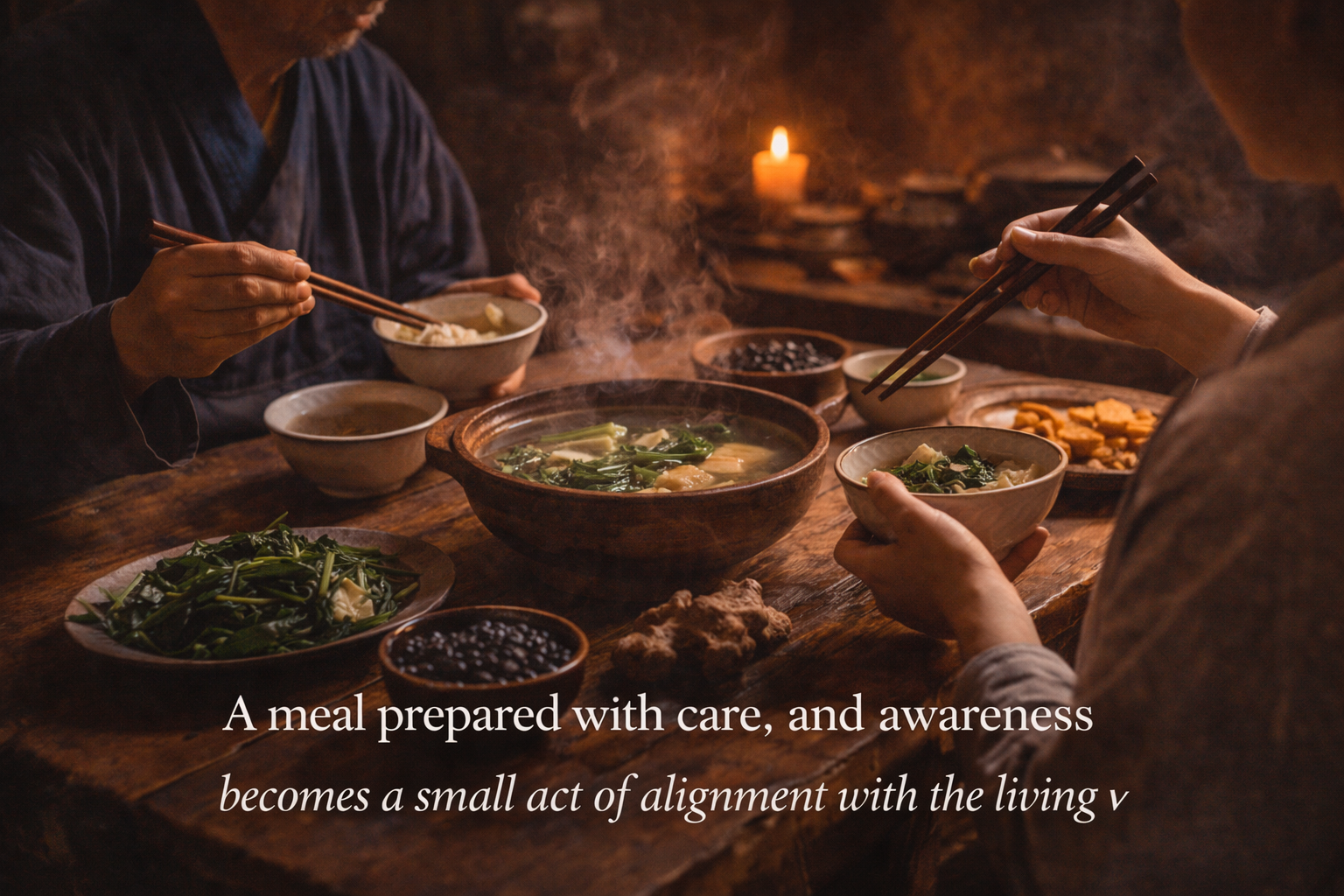
Meals are often heartier than those of other seasons, yet still balanced and moderate. A long-simmered soup shared with family on a cold evening embodies the quiet comfort of winter cooking.
The Tao of Moderation
One of the most enduring principles of Taoist food culture is moderation.
Rather than strict dietary rules or elaborate restrictions, the Taoist kitchen encourages balance and attentiveness. Meals are meant to nourish without excess, leaving the body comfortable and clear rather than heavy or depleted.
Seasonal awareness, thoughtful ingredient choices, and simple cooking methods create a style of eating that is sustainable and adaptable across different climates and cultures.
Seasonal Living Beyond the Plate
The Taoist kitchen reflects a larger philosophy of seasonal living.
Spring invites movement, cleaning, and renewed activity.
Summer encourages social gatherings and time outdoors.
Autumn brings reflection and preparation for the colder months.
Winter emphasizes rest, restoration, and quiet routines.
Food becomes one expression of this broader rhythm — a way of participating in the changing patterns of nature rather than resisting them.
The Taoist Kitchen Today
Although these ideas developed within traditional Chinese culture, the principles of the Taoist kitchen remain remarkably adaptable. Seasonal vegetables, simple broths, and balanced meals can be prepared anywhere in the world.
The philosophy asks only that we pay attention — to the weather, to the seasons, and to the needs of our own bodies.
In this sense the Taoist kitchen is less a strict culinary system than a way of approaching everyday life with care and balance.
A meal prepared with seasonal ingredients, shared slowly, and eaten with awareness becomes something more than nourishment. It becomes a small act of alignment with the rhythms of the living world.